Climate change and environmental risks are increasingly shaping health outcomes across Africa.
AHCA-Ghana supports governments and partners in integrating climate resilience into health
systems, ensuring continuity of care and protecting vulnerable populations.
We provide technical expertise in environmental health, climate risk assessment, and health
system adaptation. Our work focuses on strengthening preparedness, building resilient service
delivery systems, and integrating climate-informed approaches into planning, surveillance, and
policy.
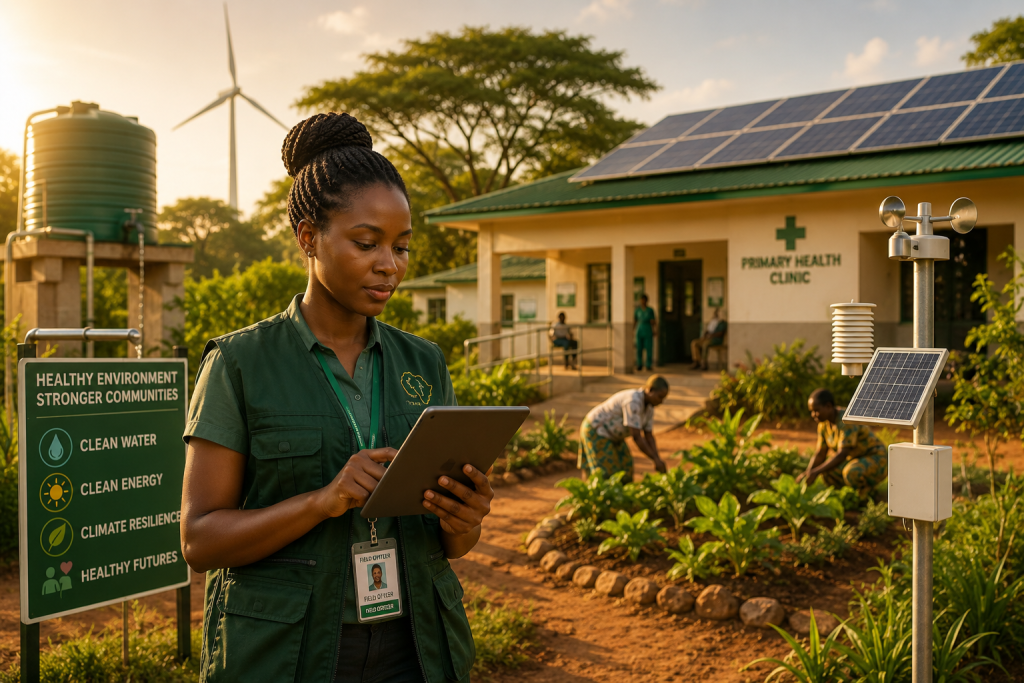
Our process
Environmental health risk assessment
We conduct comprehensive assessments to identify environmental and climate-related risks
affecting population health, including exposure to heat, flooding, drought, and pollution. These
assessments inform evidence-based planning and prioritization.
Healthcare waste management systems
We support the design and implementation of safe, sustainable healthcare waste management
systems, ensuring compliance with environmental and public health standards while reducing
risks to communities and healthcare workers.
Health vulnerability and adaptation assessment
We assess population vulnerability to climate-related health risks and develop context-specific
adaptation strategies to strengthen health system resilience and protect at-risk populations.
Integration of Climate Risks into Health Planning
We support ministries and districts in integrating climate risks into health-sector planning,
policies, and budgets, ensuring that health systems are prepared for environmental shocks such
as heatwaves, floods, and droughts.
Climate-Informed Surveillance and Early Warning Systems
We design and strengthen surveillance systems that incorporate climate and environmental data
to enable early detection of disease outbreaks and timely response to public health threats.
Health system continuity planning during environmental shocks
We support the development of preparedness and response plans to ensure continuity of essential
health services during environmental shocks and emergencies.
We help build resilient health systems that anticipate, absorb, and adapt to environmental and
climate-related shocks while maintaining essential service delivery.